IODS 2026 made one thing clear: the national defence conversation has shifted from strategy to execution. Across three days in Perth, discussion centred less on long-term concepts and more on delivery, industrial readiness and the practical steps required to build sovereign capability at pace.
With record attendance, strong government presence and a clear focus on AUKUS, sustainment and manufacturing, the conference reinforced Western Australia’s emergence as a critical player in Australia’s defence industrial future.
Western Australia positions itself at the centre of AUKUS delivery
Western Australia was positioned throughout the conference as central to the next phase of Australia’s defence industry growth. From Henderson’s role in submarine sustainment to plans for a new defence manufacturing hub, the message was consistent: WA is no longer peripheral to national capability planning.
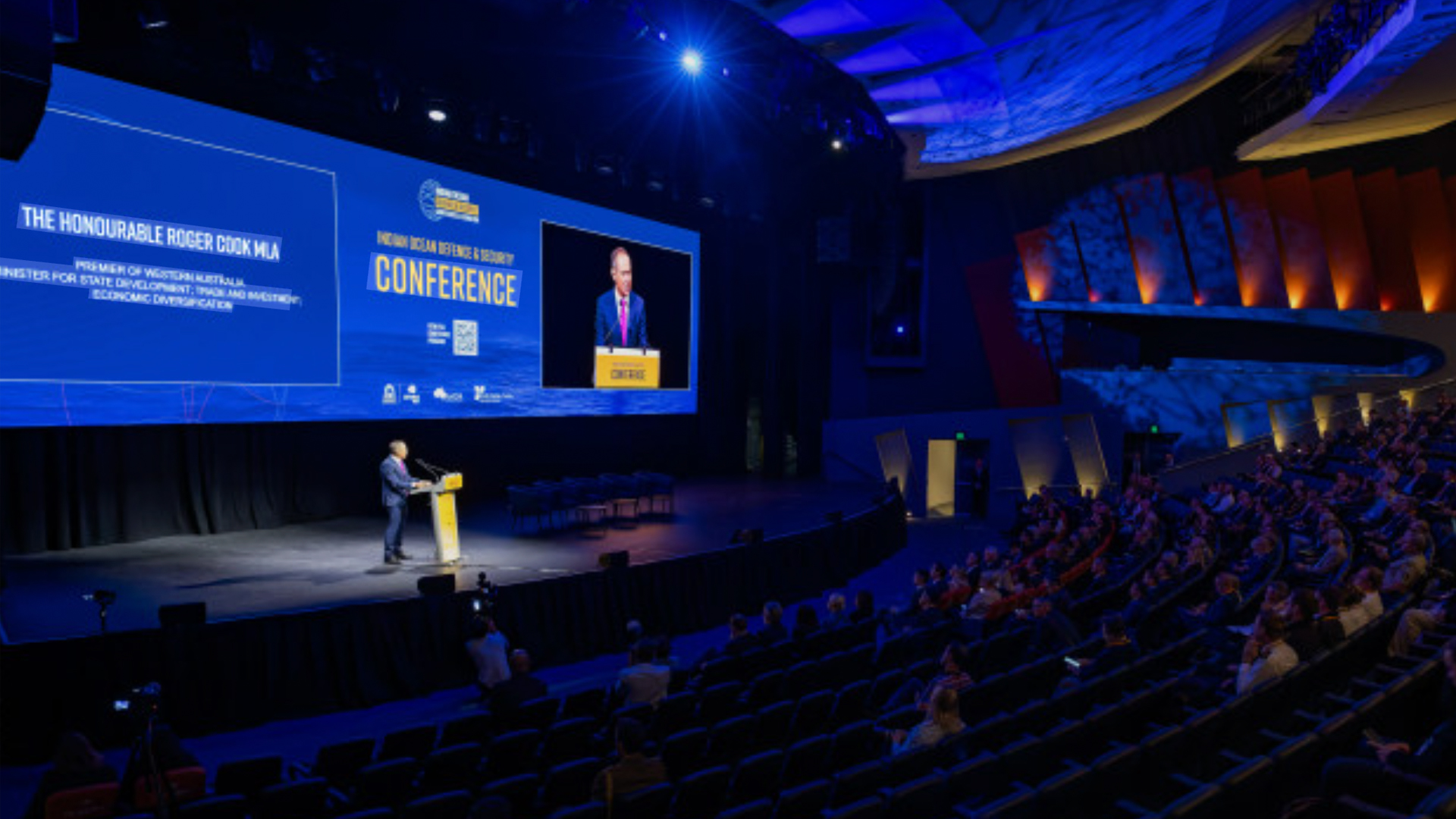
Premier Roger Cook captured that ambition directly, calling on industry to step up and help shape the state’s future industrial base. As he told delegates, “This is a call out to our most forward-thinking businesses.” The remark reflected a broader push to attract investment, strengthen sovereign manufacturing and accelerate industrial mobilisation.
Defence leaders emphasise capability readiness and industrial resilience
Conference discussions also underscored the urgency of readiness. AUKUS may dominate strategic thinking, but many speakers were focused on the immediate pressures facing Defence, including Collins-class sustainment, workforce readiness and supply chain resilience.
The tone from ministers, Navy leaders and industry representatives suggested that Australia has entered a delivery phase in which timelines, skills and industrial depth matter just as much as policy. Concerns about transition risk before future submarine capability arrives added further weight to calls for faster action and stronger sustainment capacity.
Autonomous systems and AI move from experimentation to operational capability
Technology on the exhibition floor reinforced another clear trend: autonomous and AI-enabled systems are moving rapidly into practical use. From maritime uncrewed platforms to AI-supported command and control, the emphasis was on scalable capability rather than speculative innovation.
One standout example was Hyperion Systems’ Astra 460 uncrewed surface vessel, which highlighted the potential of rapid manufacturing and sovereign technology integration. These developments point to a defence sector increasingly focused on low-cost mass, accelerated production and the operational deployment of dual-use technologies.
Industry engagement shifts from participation to partnership
Perhaps the strongest theme across IODS 2026 was the expectation that industry must now move beyond attendance and into active contribution. The event showcased a growing appetite for partnerships between government, primes, SMEs and technology developers, particularly where sovereign capability can be scaled quickly.
Premier Cook reinforced that call with a second message to business: “We want you helping to build this precinct.” That sentiment aligned closely with the mood of the conference, where collaboration was framed not as an option but as a requirement for capability delivery.
IODS 2026 showed that Australia is entering a new phase of defence industrial acceleration, with Western Australia playing an increasingly strategic role. The conference signalled that the challenge ahead is no longer defining ambition but delivering it.
For industry, that means contributing directly to capability outcomes through investment, partnership and innovation, rather than simply observing the policy conversation from the sidelines.