
Expert Integrated Logistics Support
For Defence Sector Success
Systematiq provides specialist Integrated Logistics Support (ILS) services for Defence, combining proven ILS methodologies, lifecycle expertise, and deep industry knowledge to ensure capabilities are maintained effectively, operational readiness is maximised, and total ownership costs are optimised.
GET EXPERT INTEGRATED LOGISTICS SUPPORT TODAY
OUR IMPACT
PROVEN INTEGRATED LOGISTICS SUPPORT
Systematiq provides specialist integrated logistics support services across Defence, combining proven ILS methodologies, lifecycle expertise, and deep industry knowledge to optimise maintenance efficiency, reduce ownership costs, and ensure operational readiness.
575+
PROJECTS DELIVERED
✓
DEF(AUST)5692 COMPLIANCE
260+
SATISFIED CLIENTS
40+
EXPERIENCED CONSULTANTS
YOUR PROBLEM
ARE YOUR ASSETS COSTING MORE THAN THEY SHOULD TO MAINTAIN?
Why do capable Defence contractors sometimes struggle with excessive maintenance costs, equipment downtime, and ILS compliance issues? It is not about technical capability. It is about having specialised Integrated Logistics Support (ILS) expertise to optimise maintenance processes, maintain operational readiness, and reduce total cost of ownership.

ILS REQUIREMENTS THAT DISQUALIFY DEFENCE TENDERS
Your technical solution is competitive, but your tender lacks a comprehensive ILS plan that addresses maintenance support, spares provisioning, and lifecycle costing. The result? Your proposal is deemed non-compliant and disqualified before evaluation, wasting months of effort. Without demonstrating how Defence will maintain and support your capability throughout its lifecycle, evaluators cannot assess the true cost of ownership or your understanding of government sustainment expectations.
ASSET MAINTENANCE THAT DRAINS RESOURCES UNNECESSARILY
Your Defence assets require more maintenance than projected, spare parts arrive late or in wrong quantities, and downtime impacts operational readiness. The result? Excessive maintenance costs, mission failures, and stakeholder confidence that erodes because your logistics support analysis didn’t accurately predict maintenance requirements or optimise spares inventory. Without proper RAMS analysis and lifecycle costing, you’re managing assets reactively instead of strategically.
OBSOLESCENCE RISKS THAT THREATEN LONG-TERM CAPABILITY
Critical components in your Defence systems are becoming obsolete, suppliers are discontinuing parts, and you lack a strategy to maintain operational capability. The result? Emergency redesigns, unexpected costs, and equipment that fails when you need it most because obsolescence wasn’t engineered into your support plan from the beginning. Without proactive obsolescence management, your assets face sudden failures that compromise mission readiness.
OUR DIFFERENCE
WHY LEADING DEFENCE ORGANISATIONS
CHOOSE SYSTEMATIQ FOR INTEGRATED LOGISTICS SUPPORT
When you partner with Systematiq, you gain integrated logistics support specialists who understand Defence ILS policy frameworks, combining proven methodologies with deep industry experience to reduce total cost of ownership while ensuring operational readiness.

PROVEN DEFENCE ILS EXPERTISE
Our consultants have lived experience delivering Defence ILS requirements under DEF(AUST)5692 policy and managing LAND programs. We understand how Defence evaluators assess ILS plans, what triggers tender disqualification, and how to demonstrate lifecycle supportability. Our team includes former Defence ILS managers and armoured corps officers with decades of Defence experience.

LOGISTICS SUPPORT STRATEGIES THAT REDUCE OWNERSHIP COSTS
We optimise your entire capability lifecycle. Our specialists use Logistics Support Analysis (LSA) to define, analyse, and quantify maintenance requirements, reducing costs while maintaining operational readiness. We develop RAMS analysis, lifecycle costing models, and spares optimisation strategies that minimise downtime and maximise system performance.

OBSOLESCENCE ENGINEERING THAT PROTECTS LONG-TERM CAPABILITY
We proactively manage component obsolescence before it becomes a crisis. Our specialists use mechanical and electrical expertise to maintain, replace, or redesign outdated parts, ensuring ongoing functionality of your Defence systems. This capability is crucial in aerospace, avionics, and electronics where technology changes rapidly and component availability threatens operational readiness.

COMPREHENSIVE ILS CAPABILITY THAT WINS DEFENCE TENDERS
We develop comprehensive logistics support plans demonstrating deep understanding of maintenance support, spares provisioning, facilities requirements, and lifecycle costing. Our ILS submissions include FRAR, RPL, and CDATA that show Defence evaluators you understand total cost of ownership and can support the capability throughout its lifecycle.
INTEGRATED LOGISTICS SUPPORT PROCESS
FROM CAPABILITY GAP TO OPERATIONAL READINESS
Delivering Integrated Logistics Support (ILS) requires more than maintenance plans. It relies on understanding Defence ILS policies, RAMS methodologies, lifecycle costing, and the realities of keeping mission-critical capabilities ready. Our approach turns complex logistics requirements into cost-effective strategies that optimise maintenance and reduce total cost of ownership.
INTEGRATED LOGISTICS SUPPORT PROCESS
FROM CAPABILITY GAP TO OPERATIONAL READINESS
Delivering Integrated Logistics Support (ILS) requires more than maintenance plans. It relies on understanding Defence ILS policies, RAMS methodologies, lifecycle costing, and the realities of keeping mission-critical capabilities ready. Our approach turns complex logistics requirements into cost-effective strategies that optimise maintenance and reduce total cost of ownership.

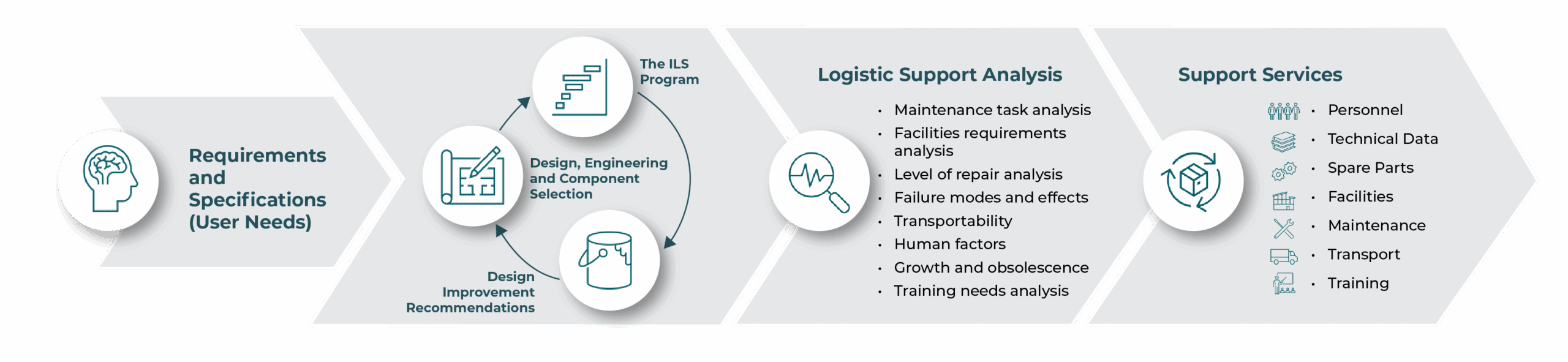
REQUIREMENTS & SPECIFICATIONS
The process begins by establishing the User Needs. This involves defining the operational requirements and technical specifications that the system must meet to ensure it is fit for purpose and supportable throughout its life.
DESIGN, ENGINEERING & REFINEMENT
In this stage, the process enters an iterative loop to ensure supportability is “baked into” the hardware and software.
-
Design, Engineering, and Component Selection: Building the system architecture.
-
The ILS Program: Managing the logistics integration within the engineering team.
-
Design Improvement Recommendations: Providing feedback to engineers to make the product easier or cheaper to maintain.
LOGISTIC SUPPORT ANALYSIS (LSA)
This is the most technical phase, where the support strategy is quantified and validated.
-
Maintenance Task Analysis: Defining step-by-step repair procedures.
-
Level of Repair Analysis (LORA): Determining if a part should be repaired or replaced.
-
Failure Modes and Effects (FMEA): Identifying potential break points.
-
Additional Analyses: Including Human Factors, Transportability, Obsolescence Planning, and Training Needs.
SUPPORT SERVICES
The final phase is the delivery of the actual support resources required to keep the system operational in the field.
-
Personnel & Training: Qualified operators and technicians.
-
Technical Data: Maintenance manuals and engineering drawings.
-
Supply Chain: Spare parts, transport, and logistics.
-
Infrastructure: Maintenance facilities and specialized tools.
Our TEAM
THE INTEGRATED LOGISTICS SUPPORT SPECIALISTS BEHIND YOUR OPERATIONAL SUCCESS
Systematiq’s integrated logistics support team combines deep Defence industry expertise with proven logistics support methodologies. Our consultants include former Defence ILS managers, procurement specialists, and RAMS analysts with decades of experience. We don’t just follow ILS frameworks. We understand how Defence evaluators assess lifecycle supportability and how to reduce total cost of ownership from the inside.


Head of Delivery
Sarah Norton

Pre-Contracts Manager
Liana Tucker

Senior Bid Writer
Victor Zhang
COMPREHENSIVE ILS SERVICES
EXPERT INTEGRATED LOGISTICS SUPPORT SERVICES
FOR THE DEFENCE INDUSTRY
Systematiq delivers end-to-end integrated logistics support services that cover every aspect of the capability lifecycle, from definition through to disposal. Whether you’re responding to Defence ILS tender requirements or managing complex Defence programs, our specialist services are designed to optimise maintenance efficiency, reduce total cost of ownership, and ensure operational readiness.
LOGISTICS SUPPORT ANALYSIS (LSA)
We use a highly structured approach to define, analyse, and quantify your logistics support requirements, optimising your maintenance efficiency and reducing the cost of ownership for your assets. Our specialised integrated logistics practitioners will provide you with the knowledge to realise the potential of your business' capabilities. Logistics Support Analysis is the foundation of effective ILS planning, identifying maintenance tasks, support equipment needs, spares requirements, and training demands with the precision Defence evaluators expect. Our LSA methodology ensures your logistics support plan is data-driven, not assumption-based, giving you confidence in your maintenance predictions and lifecycle cost estimates.
RELIABILITY, AVAILABILITY, MAINTAINABILITY, AND SAFETY (RAMS)
Reliability, Availability, Maintainability, and Safety (RAMS) are key capabilities in systems engineering and operations management. They optimize costs, manage risks, improve customer satisfaction, ensure regulatory compliance and enhance operational efficiency. Reliability refers to a system's ability to perform its functions under specified conditions. Availability measures the operability of a system as required. Maintainability is about restoring system operation quickly after a failure. Safety ensures that the system operates without causing unacceptable harm or damage. Each component has a specific focus and plays a vital role in capability management. Our RAMS specialists develop comprehensive analyses that demonstrate to Defence stakeholders that your system can be supported cost-effectively throughout its operational life.
LIFE CYCLE COSTING (LCC)
Life Cycle Costing (LCC) is a method that considers all the costs associated with the acquisition, ownership, and disposal of an asset or system over its entire life cycle. LCC includes initial capital costs, operation and maintenance costs, and disposal costs. It's a crucial element in capability management, particularly in Defence and large infrastructure sectors. Our LCC specialists develop comprehensive cost models that reveal the true cost of ownership beyond acquisition price. Defence evaluators use these models to assess value for money across competing proposals. Understanding lifecycle costs positions you competitively in tenders and supports informed capability management decisions.
SPARES ASSESSMENT AND OPTIMISATION
Spares Assessment and Optimisation refers to the evaluation and improvement of spare parts inventory. It ensures the right parts are available when needed, minimising downtime and maximising system performance. This involves analysing usage patterns, failure rates, lead times, and costs. Systematiq's expertise in this area aids in cost-effectiveness, operational efficiency and customer satisfaction by reducing unnecessary inventory, preventing equipment downtime, and ensuring optimal system availability. It's an important capability as it directly impacts operational readiness and bottom-line results. For Defence contractors, we develop Recommended Provisioning Lists (RPL) that meet DEF(AUST)5692 requirements.
OBSOLESCENCE ENGINEERING
Obsolescence Engineering involves managing and addressing the lifecycle of components in a system that are becoming outdated or discontinued. This discipline uses mechanical and electrical engineering expertise to maintain, replace or redesign these parts, ensuring the ongoing functionality and efficiency of the system. It's crucial in industries like aerospace, avionics, and electronics where technology changes rapidly. Obsolescence Engineering minimises risks associated with outdated components, such as equipment failure or unavailability of spare parts. It's essential because it enhances system reliability, maintains operational efficiency, and prevents potential costs associated with sudden system failures or redesigns. Our obsolescence specialists proactively manage component lifecycles before they become operational crises, protecting your long-term capability and avoiding emergency redesign costs.
Systematiq Latest News and Case Studies
Read our latest news and get insights on our latest projects
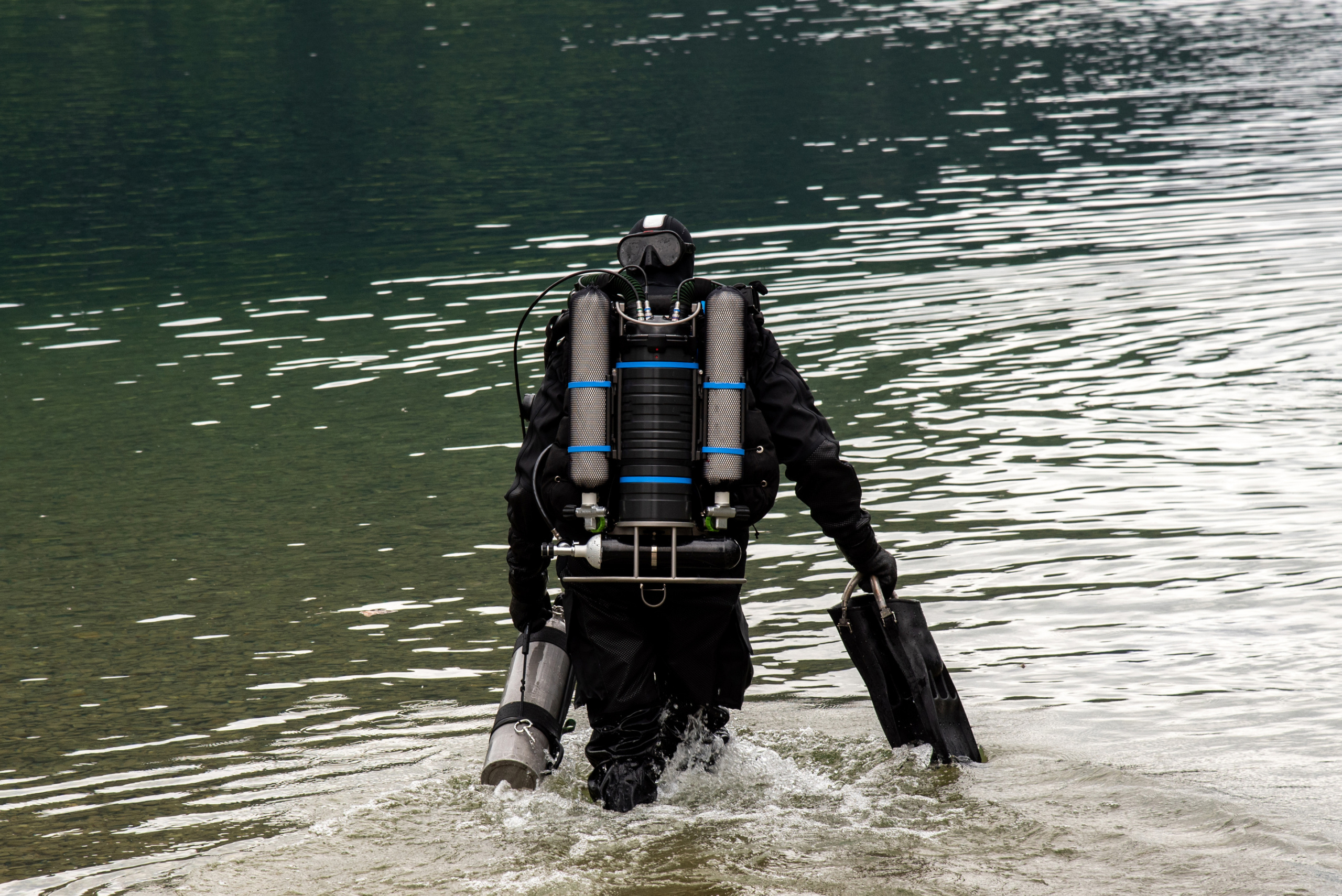
Contract Success for JFD for Underwater Life Support Systems is a Win for Systematiq
The recent announcement from the ADF to secure local maintenance and support of diving and hyperbaric equipment is welcome news and provides some certainty on a submission made almost over…

Staff Spotlight: Tony Copley
Navigating defence projects with agility and flexibility Tony Copley is the current Integrated Logistics Support Manager at Systematiq. A former soldier and armoured corps officer with over 14 years of…

Staff Spotlight: Greg Warren
Teamwork and Trust core to Veteran’s Success in Systematiq Greg’s journey in the defence industry equipped him with invaluable skills and values that have been essential to his success. With…

Case Study: Defence ILS Project Management Support – Land 19-7B
By integrating and understanding our customer, Systematiq delivers successful Project Management support. With their in-country history spanning two decades, Raytheon Australia have become a trusted capability partner and leading provider…
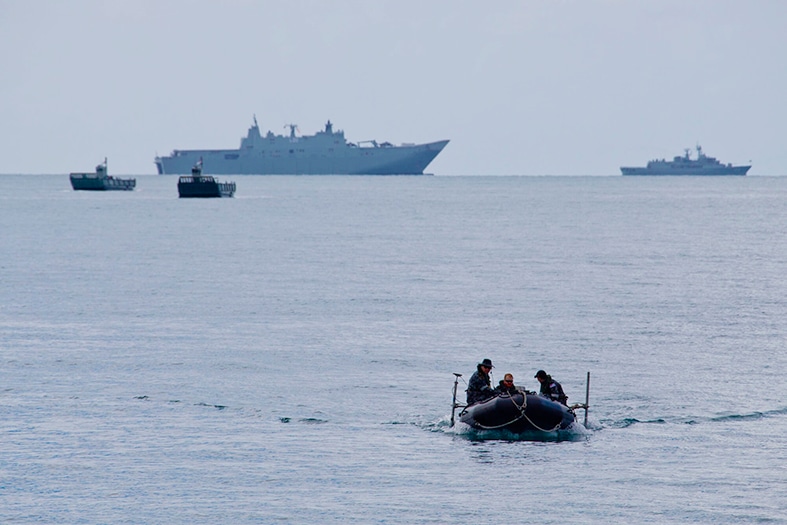
Case Study: ILS/Systems Engineering Support
Photo: The SEA1770 Phase 1 project provides for the procurement of a Defence Rapid Environment Assessment for the ADF. Photo courtesy Australian Department of Defence. Systematiq’s team seamlessly integrates to…
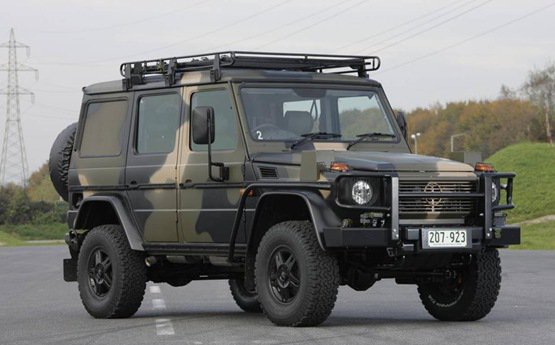
Case Study: Providing valuable insights into Defence vehicle usage and decision-making
Demonstrates supportability engineering and was well received by CASG.
Case Study: Department of Defence Joint Logistics Command – Testimonial
“Joint Logistics Command selected Systematiq to provide professional services to assist with the development of a warehousing cost modelling tool; and to support the development of Value Propositions for the…
FREQUENTLY ASKED QUESTIONS
Have questions? You’re in the right place! Explore our FAQs for friendly, straightforward answers about our services, processes, and more. If you don’t find what you’re looking for, feel free to reach out—we’re always happy to help!
What Services are included in ILS?
Integrated Logistics Support (ILS) applies a holistic approach to capability management and provides a suite of services to address the unique technical and logistical needs of each element of capability.
Let’s use the example of the Australian Defence Force (ADF) purchasing a fleet of new trucks to illustrate how ILS works in practice:
The ADF identifies a capability gap in its transport assets (light and medium trucks). Further analysis of that gap leads to the creation of a set of performance requirements for potential vendors to respond against. Vendors will be asked to outline how the capability (the trucks) will be managed and maintained — and that’s where ILS comes in.
The suite of ILS services and reports for the truck purchase could include:
-
Facilities Requirements Analysis Report (FRAR): Outlines the facility considerations for a fleet, such as the size of a workshop and the equipment required to conduct maintenance tasks.
-
Recommended Provisioning List (RPL): Details the range and quantity of spares, packaging, training equipment, materials, and support/test equipment required. This ensures the ADF can maintain the capability effectively, train its workforce, and conduct servicing.
-
Codification Data (CDATA): Assesses the essential characteristics of items to establish unique NATO-recognised identifiers. This allows any mechanic to order a part using its unique number, ensuring consistency across NATO and NATO-sponsored countries.
-
Logistics Support Analysis (LSA): Quantifies maintenance requirements to ensure adequate planning for operational readiness.
-
RAMS Analysis (Reliability, Availability, Maintainability, Safety): Ensures the capability is dependable, available when needed, maintainable efficiently, and safe to operate.
-
Life Cycle Costing (LCC): Provides a complete view of the total cost of ownership, including acquisition, operation, maintenance, and disposal.
-
Obsolescence Engineering: Manages the lifecycle of components that may become outdated or discontinued, reducing risk and maintaining system efficiency.
These ILS services ensure the ADF — or any Defence capability owner — can purchase, operate, maintain, and support a capability effectively throughout its operational life, while optimising cost, readiness, and safety.
Why is ILS critical for Defence tenders?
ILS is often a key requirement in Defence tenders because it ensures that equipment or systems can be efficiently and cost-effectively supported throughout their lifecycle. Without proposing an ILS plan, your tender might not be considered competitive compared to others that do. It may raise questions about the long-term viability of your product or service and your understanding of Government sustainment expectations. In many cases, tenders that do not include comprehensive ILS responses are deemed non-compliant and disqualified outright, regardless of technical merit. Defence evaluators need to understand the total cost of ownership, not just acquisition price, and your ILS plan demonstrates you've thought through maintenance support, spares provisioning, facilities requirements, and lifecycle costs.
What is RAMS and why does it matter?
RAMS stands for Reliability, Availability, Maintainability, and Safety. These are key capabilities in systems engineering and operations management that optimise costs, manage risks, improve outcomes, ensure regulatory compliance, and enhance operational efficiency.
-
Reliability: A system's ability to perform its functions under specified conditions.
-
Availability: Measures the operability of a system as required.
-
Maintainability: The ability to restore system operation quickly after a failure.
-
Safety: Ensures the system operates without causing unacceptable harm or damage.
RAMS analysis helps demonstrate that your system can be supported cost-effectively while maintaining operational readiness.
How does Life Cycle Costing benefit Defence projects?
Life Cycle Costing (LCC) is a method that considers all costs associated with the acquisition, ownership, and disposal of a system over its entire lifecycle. This includes initial capital costs, operation and maintenance, training, facilities requirements, and disposal costs.
LCC is crucial in Defence because it reveals the true cost of ownership, not just the acquisition price. Defence evaluators use LCC to assess value for money across competing proposals and to ensure that a capability can be sustained effectively throughout its operational life. Comprehensive LCC demonstrates that your solution provides the lowest total cost of ownership while maintaining operational readiness and compliance with Government sustainment expectations.
What is obsolescence engineering and why is it important?
Obsolescence Engineering involves managing components that are becoming outdated or discontinued. This discipline uses mechanical and electrical engineering expertise to maintain, replace, or redesign these parts, ensuring the ongoing functionality and efficiency of the system. It's crucial in sectors like aerospace, avionics, and electronics where technology changes rapidly and suppliers discontinue components before systems reach end of life. Obsolescence engineering minimises risks associated with outdated components, such as equipment failure or unavailability of spares, enhancing reliability, operational efficiency, and readiness.
How does spares optimisation reduce costs while maintaining readiness?
evaluates and improves spare parts inventory to ensure the right parts are available when needed, minimising downtime while controlling inventory costs. Specialists analyse usage patterns, failure rates, lead times, and costs to develop optimised provisioning strategies. This reduces unnecessary inventory while preventing equipment downtime that could compromise operational readiness. For Defence contractors, Recommended Provisioning Lists (RPL) meet DEF(AUST)5692 requirements and demonstrate accurate spares prediction. Effective spares optimisation directly supports operational readiness, cost efficiency, and the long-term sustainability of the capability.
CONTACT INFO
REACH THE TEAM
BEHIND THE RESULTS
Our team is ready to respond to your inquiries and project needs. You’ll hear back from us within 24 hours.


